
Have you had a class full of overwhelmed woodwind methods students—or are you one of those overwhelmed students who are facing inefficient or unclear practice expectations outside of class? Or are you a music educator who feels underprepared on secondary woodwind instruments? Rather than guessing what to practice, having an intentional approach to each practice session can help you achieve your goals so you can feel more confident.
Learning woodwind instruments in methods classes is an important part of music teacher preparation. Taking these unfamiliar instruments into the practice room and building the muscles for a predictable embouchure that produces a characteristic sound, and solidifying finger technique, is almost a rite of passage! While methods class sessions should teach how to develop tone and technique, out-of-class practice is critical to establish personal consistency and proficiency.
Finding an Approach that Works
During the seventeen years I taught woodwind methods courses, I tried different approaches to guiding my students in practicing. First, I tried assigning pages from a beginning band method book. That approach did not work well because the students in the classes were not beginning musicians; they were beginners on these instruments. When I assigned pages 1-25 for students to practice during the first couple of weeks, students freaked out! “How can she expect us to play almost ALL of Book One! This would take a beginning band the whole YEAR to get through!” The thing is, those pages only introduced about an octave’s worth of notes, all using rhythms, articulations, and musical terms that were not new to these advanced musicians. Regardless, students were overwhelmed by this inefficient approach.
To keep the peace, I tried replacing method books with other published woodwind methods texts that contained some practice material inside, but those didn’t work well either. In some books, the materials were limited to only a few exercises. In others, the music started off too difficult or was limited to scales or similar. Some were very expensive or out-of-print and thus difficult to obtain. I tried assigning students to practice a certain number of minutes on whatever they wanted on SmartMusic, but that approach was difficult to monitor and generally lacked intention. Students were confused with the cumbersome and inconsistent approaches.
Focus and Simplicity
As I reflected on the structure for practicing that I learned from Dr. Angeleita Floyd during my master’s degree at the University of Northern Iowa, I remembered how helpful it was to focus specifically on tone, technique, scales, etudes, and repertoire intentionally during practice time. I began to wonder what it could look like to bring a similar intentional structure to practice in woodwind methods courses. So, during the summer of 2023, I wrote a draft of some practice materials and gave them a test-run in the Flute, Oboe, & Bassoon Methods class I was teaching.
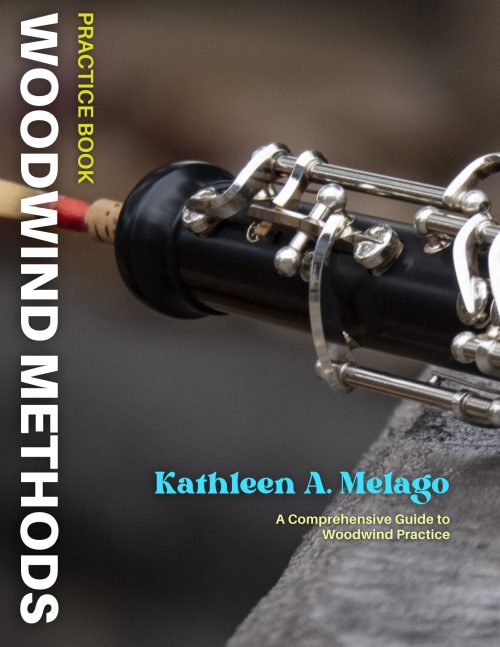
Students seemed to appreciate having a PLAN for what to do in the practice room and liked that when they opened the book to that week, what to practice was before them on the left and right side of the opened book. There was no searching for ideas of what to practice, and the amount to practice was reasonable. The practice exercises were written for their level of musicianship as highly competent music education majors learning secondary instruments. After the successful test-run in Flute, Oboe, & Bassoon Methods, I wrote a version for Clarinet & Saxophone Methods. The Woodwind Methods Practice Book was built on what I used in those classes. This approach provided students with a clear plan of what to practice and a manageable scope that was achievable for practice sessions among all their other school responsibilities.
While originally designed for woodwind methods students, the Woodwind Methods Practice Book is a fantastic resource for band directors who wish they were better at one or more of the woodwinds and want a thoughtful, intentional, balanced approach. Perhaps you only had three weeks on each woodwind instrument in your music education training—or maybe you only studied a few of the woodwinds in your studies. Depending on your schedule, you might use one week’s lesson per week, strengthening your skills on all five woodwind instruments over the course of thirty-five weeks, or maybe take your time by doing one week’s lesson as a focus per two weeks or month. These practice lessons are designed to take you to the next level at the pace that best fits your life.
How to use this Text
Band directors might like to keep a few copies of the book on hand or in the school library to loan to students who are switching to learn a new instrument after building skills on another instrument first. Like music education students in a methods class, they can benefit from the sequenced approach that respects their prior experiences in music. Eager students can work through the book to efficiently build range and knowledge of fingerings to prepare for their advanced band repertoire on the new instrument.
The approach in this book is rigorous and moves quickly, but methodically and intentionally. Each week contains music composed specifically for this book, and seven weeks of practice material for flute, clarinet, saxophone, oboe, and bassoon are included. Suggestions are provided for extending the exercises with repertoire, based on the user’s situation.
Are you curious yet? If you are looking to improve your skills or those of any students learning woodwinds as a secondary instrument, this book will help you do just that! Imagine how nice it will be for your woodwind methods students to make more progress on the instruments in their practice sessions next semester or how much more confident you will feel if you dedicate a little time this summer to focus on one or two woodwind instruments with intentional practice through the Woodwind Methods Practice Book!




Leave A Comment