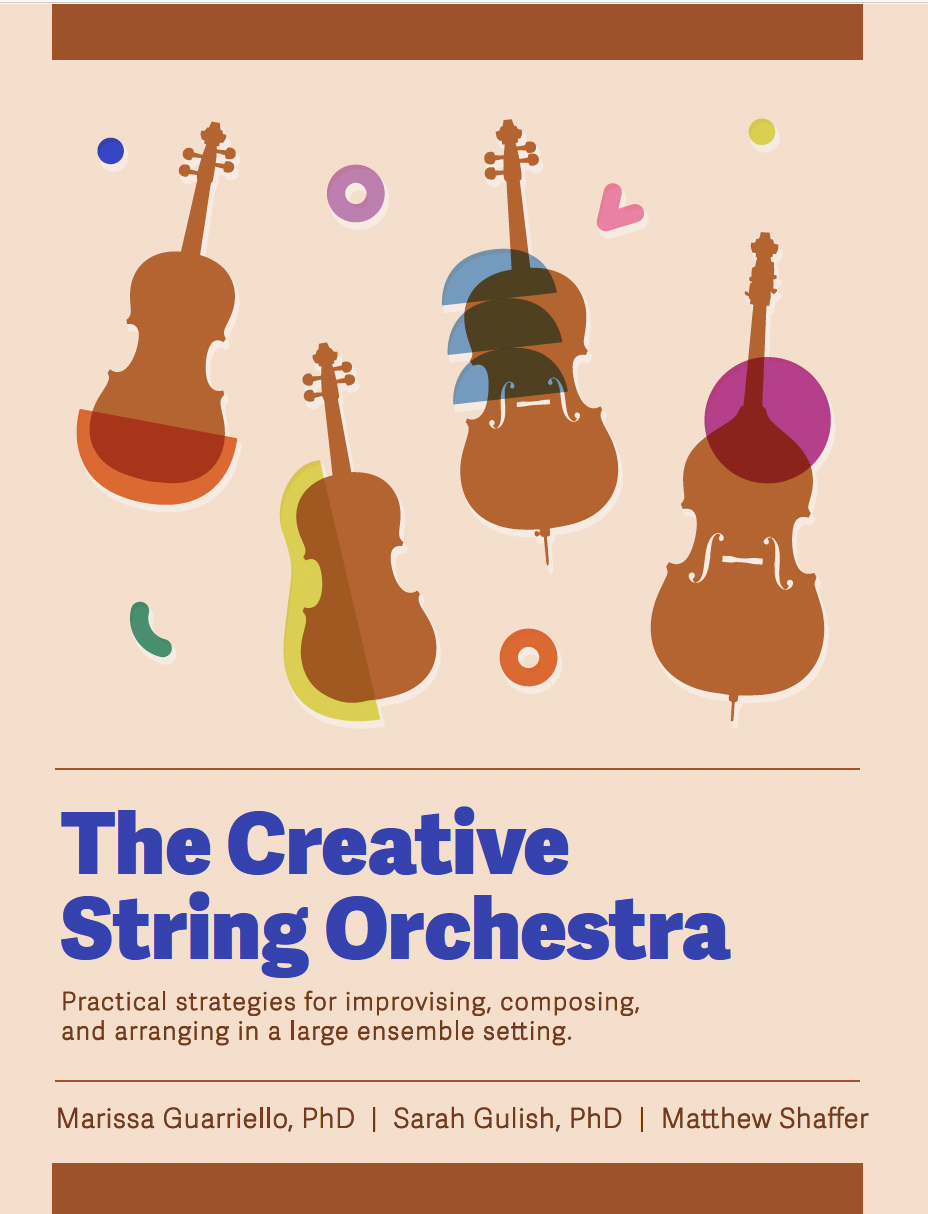
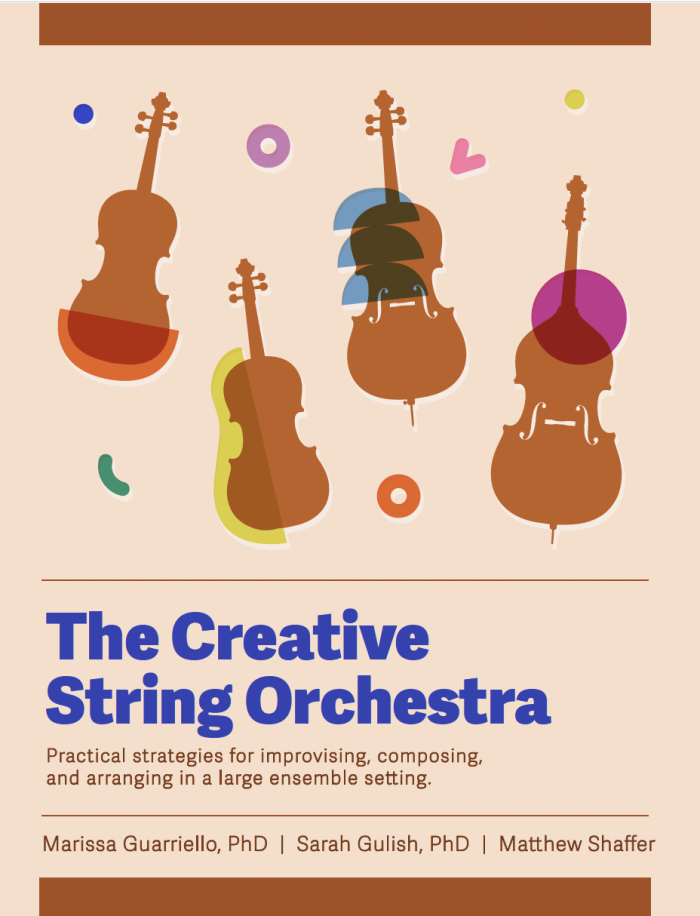
The Creative String Orchestra 2nd Edition

$20.00

by Marissa Guarriello, Sarah Gulish, and Matt Shaffer

This is a paperback book with links to activities. Orders ship in 1-2 business days. 

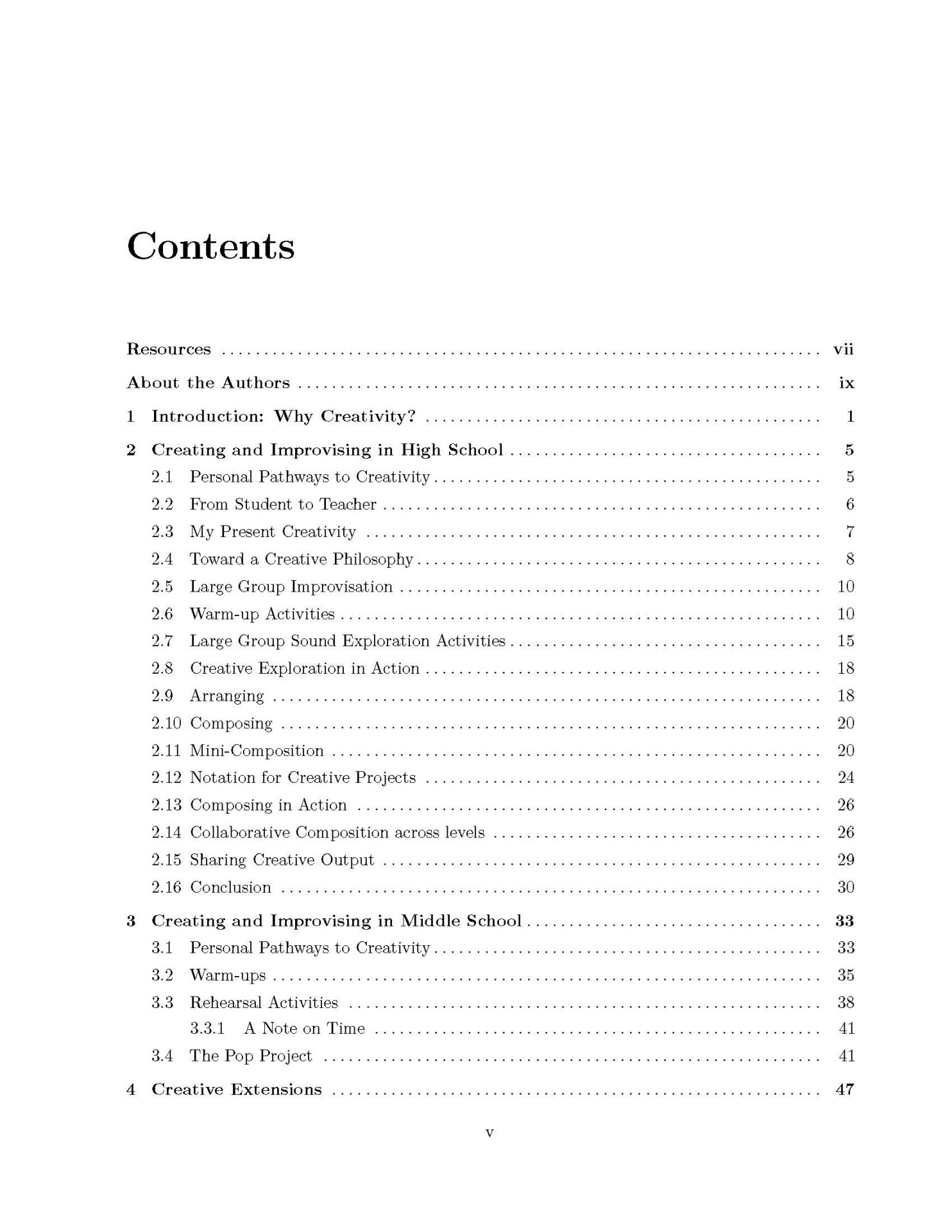
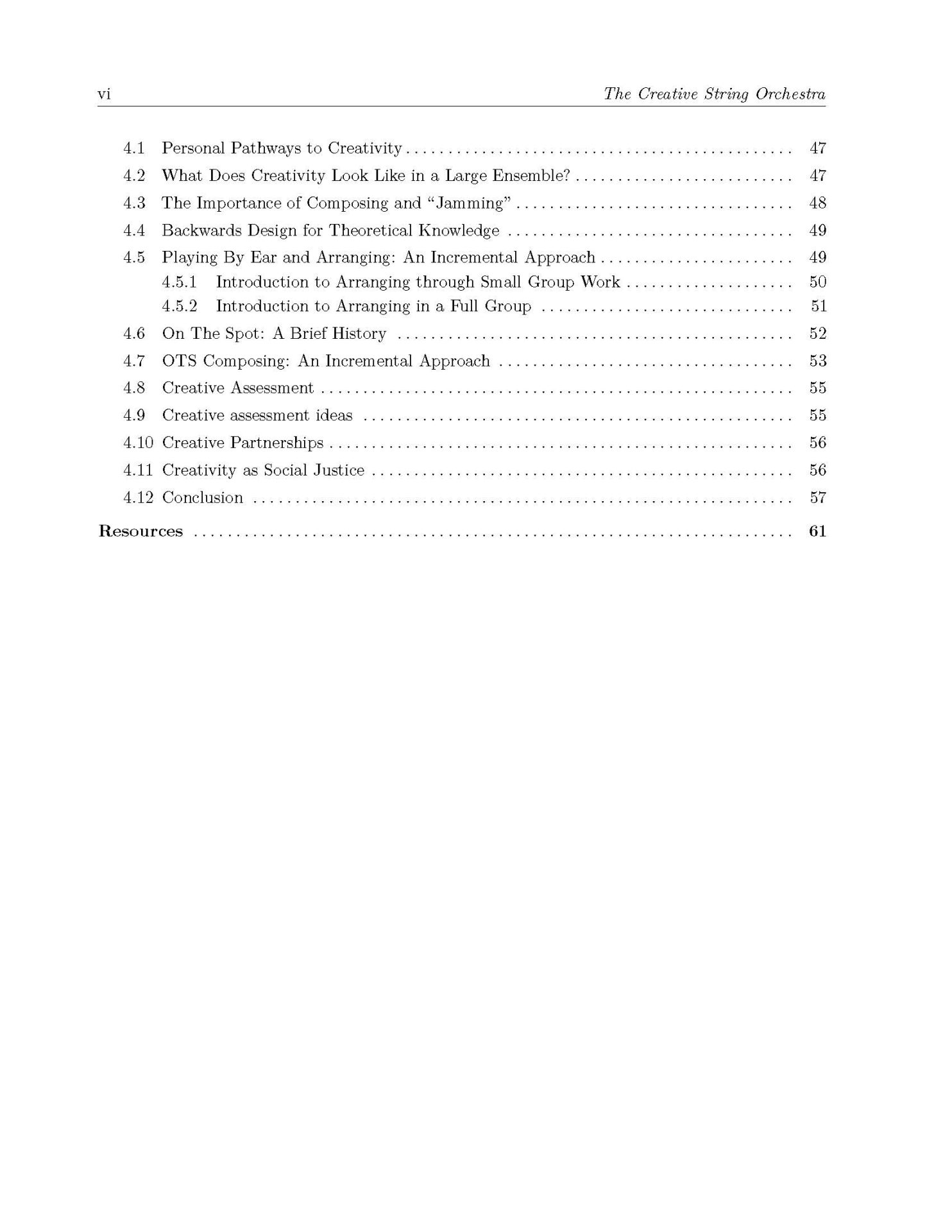
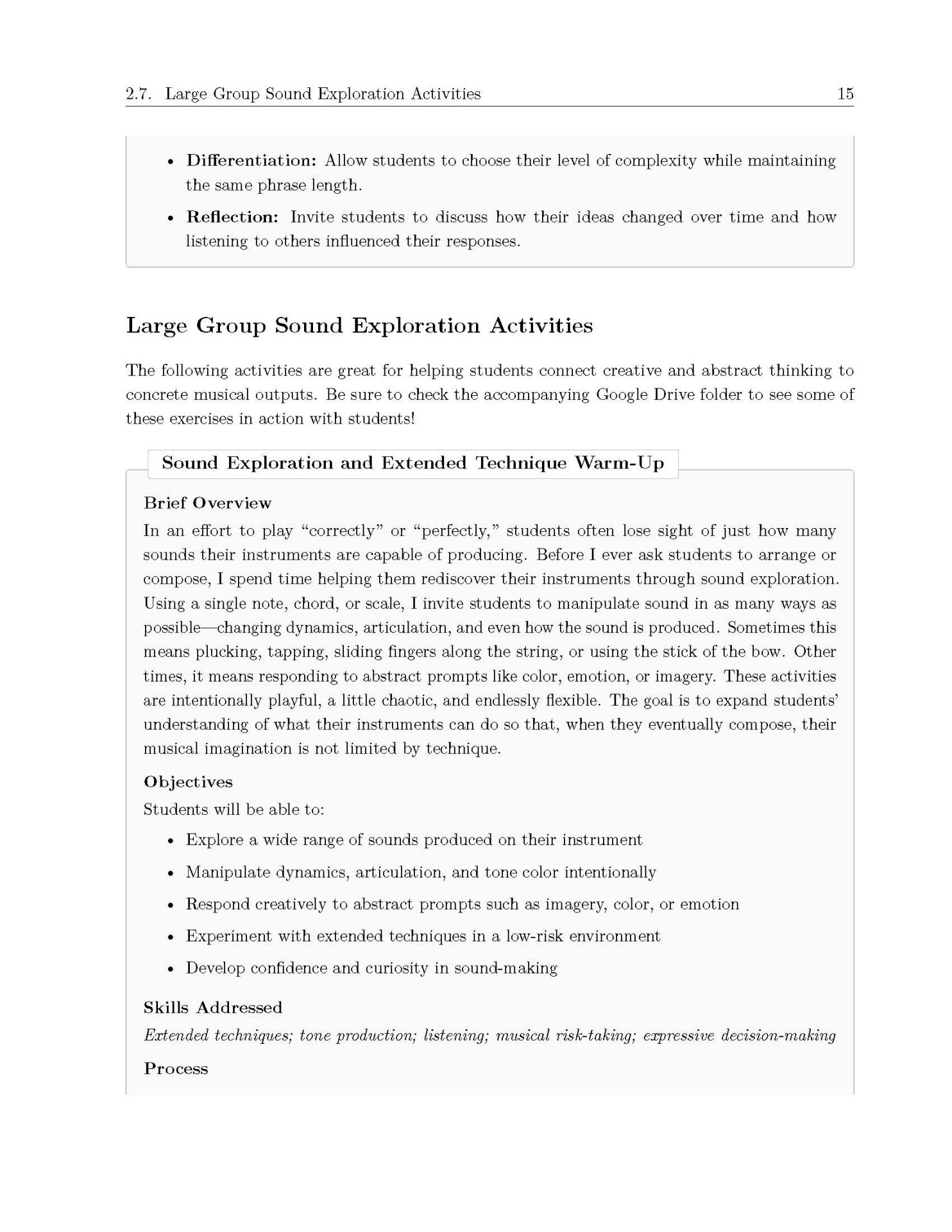
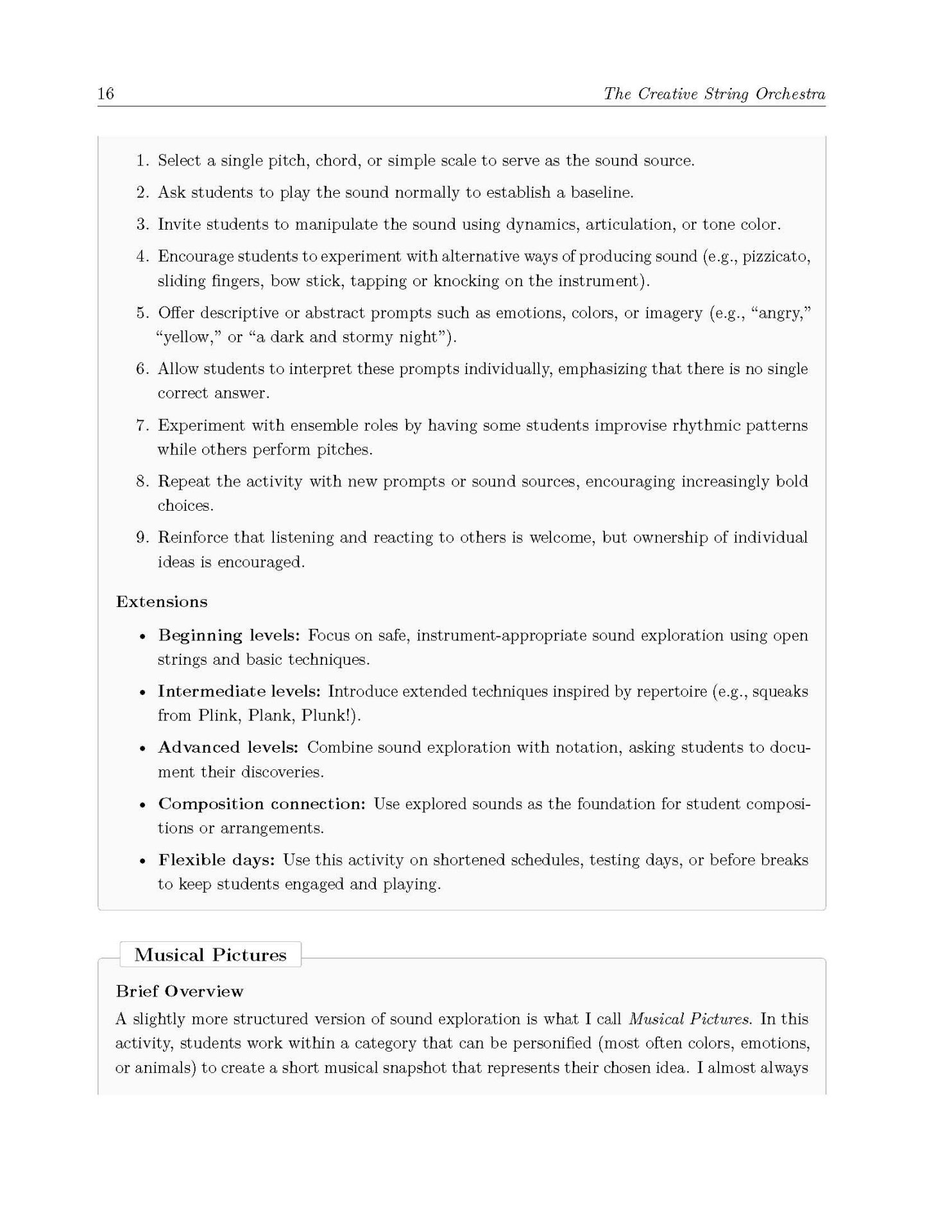
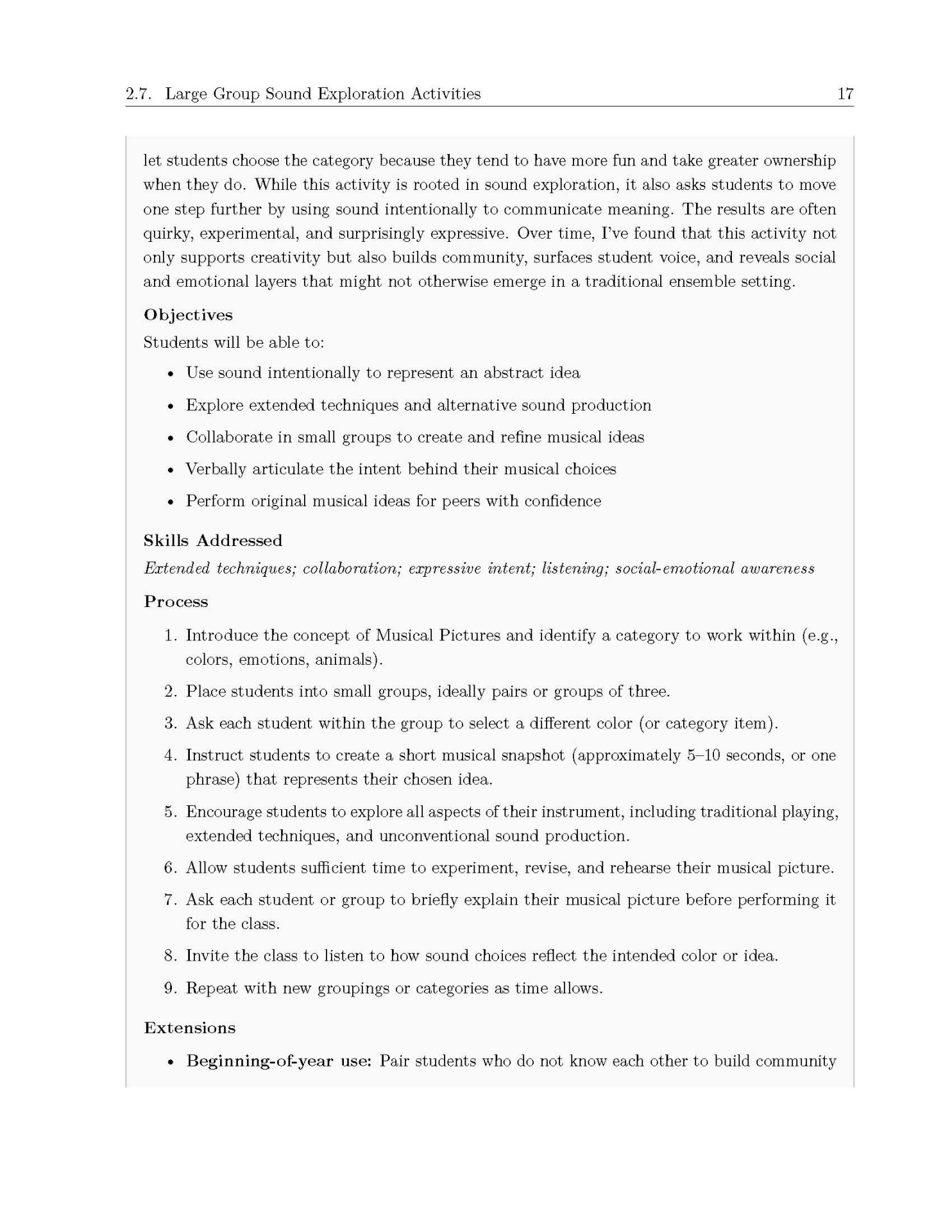
Want to engage your students in creative music-making but don’t know where to start? This practical eBook takes you step-by-step through improvising, creating, arranging, and performing with your students. Written from the perspective of three string orchestra educators, these tried and true methods will transform your music classroom into a music laboratory. This book includes links to videos, student project examples, editable google docs, and other supportive resources. The authors address topics such as “creativity in remote teaching” and “creativity as social justice,” as well as rehearsal and lesson plan ideas to explore improvisation, composing, and other aspects of creative music-making!

Description

This Paperback edition of  The Creative String Orchestra includes NEW activities and links to videos and more! 

In the rewrite of the national standards for music education in 2014, creativity earned a new place in the discussion (National Coalition for Core Arts Standards [NCCAS], 2014 ; NAfME.org, 2019). At the forefront of expectations for how we guide students through music learning, creativity is seen as an indispensable part of the well-rounded music classroom (Giddings, 2013; Hickey, 2001; Hogenes, Oers, Diekstra, & Sklad, 2015). However, most music learning in secondary education exists within the paradigm of a large ensemble structure. Within that structure, the majority of learning occurs following a teacher-centered model, in which the teacher directs and plans all learning activities (Abrahams, 2010; Green 2005; Kokotsaki, 2012). Compounded by the stress of concert preparation and festival participation, many music teachers resort to teaching by rote and focusing on music literacy through the lens of reading music, over other musical activities that are touted as being essential to music learning (Kratus, 2019; Guarriello, 2019).

What does this mean for creativity? It means that within the large ensemble structure, little time or emphasis is given for creating—both individually and collaboratively (Fairfield, 2010; Guarriello, 2019; Stringham & Snell, 2019). But why is it important that we create with our students and provide the tools and experiences to enjoy rich creative musical lives far beyond the classroom? While some have documented creative practices within the large ensemble structure (Abrahams, 2010; Guarriello & Gulish, 2018), we need more hands-on tools for practicing teachers looking to incorporate more creativity into their ensemble programs (Hickey, 2001; Kratus, 2019).

This book does not cover every aspect of creativity within the orchestra classroom. Instead, it sheds light on three practitioners working in secondary education, seeking to incorporate creativity into their programs. In the following pages, you will find practical strategies, advice, and examples of ways in which to incorporate creative processes and projects into your string program.

From warm-up improvisation strategies to large scale composition projects, this book provides practical, hands-on activities that can be used in person or through remote teaching. Video examples, student work, and editable google docs are included with the purchase of each book.

 

About the Authors

Marissa is currently the orchestra director at Pennridge High School in Perkasie, PA. She holds degrees from Penn State University (BME) and The Eastman School of Music (MA) in Music Education. She is currently the Vice President of the Bucks County Music Educators Association. She has presented workshops nationally and her research interests include the inclusion of creativity into large ensemble classrooms.

Sarah Gulish holds a Ph.D in music education from Temple University. Since 2007, Sarah has taught at Lower Moreland High School located in Pennsylvania in the U.S.A. She serves as Adjunct Professor of Music Education at SUNY Buffalo State and Temple University. Her teaching centers on creativity and she is an active researcher, writer, presenter, and clinician at the state, national, and international levels. Her orchestras at Lower Moreland have been featured at national conferences for their “on the spot” improvised performances. Sarah serves as the Eastern representative
on the NAfME Council for orchestral education.

Matt is currently the orchestra director at Mount Nittany and Park Forest Middle Schools in the State College Area School District. He completed his undergrad at Penn State University (BS in Music Education) and his Masters at Lebanon Valley College (MME). His comprehensive middle school string program focuses on performance and creative projects.  He emphasizes playing techniques while expanding his students’ knowledge of composition and creativity through their playing.  His students are competitive players representing State College Area School District at festivals and competitions locally and nationally.


Reviews

There are no reviews yet.

Be the first to review “The Creative String Orchestra 2nd Edition”

Your email address will not be published. Required fields are marked *

Go to Top